
Hurulu Eco Park is an important animal habitat in Sri Lanka’s arid zone, and it is part of the elephant corridor that connects Minneriya and Kaudulla National Parks. While it is best known for Hurulu Eco Park’s vast herds of wild elephants, the park also sustains a varied assortment of mammals, birds, and reptiles.
Mamals in Hurulu Eco Park
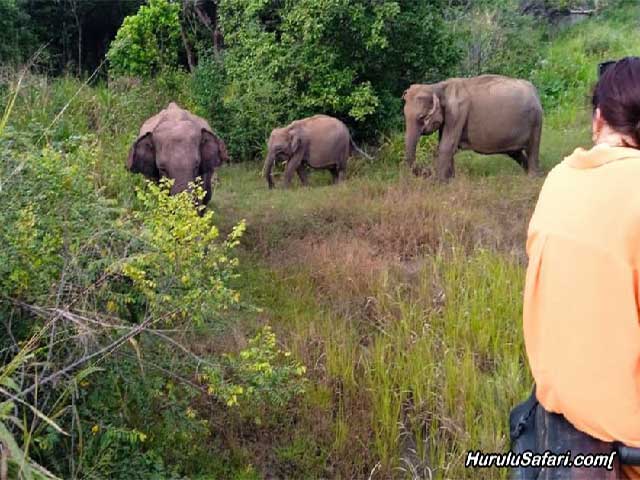
Sri Lankan Elephants: The park’s main attraction; they are abundant, particularly during their migration times (December-January).
Deer species: Spotted deer (Axis deer) are plentiful, as are Sambar deer.
Grey langurs, Toque macaques, and the endemic Purple-faced leaf monkey are all primates.
Carnivores (Rare): Sightings of the Sri Lankan leopard, sloth bear, Rusty-spotted cat, and Fishing cat are considered unusual but conceivable.
Others include water buffalo, wild boar, golden jackal, Indian hare, porcupine, little Indian civet, and ruddy mongoose.
Birds in Hurulu Eco Park
The park is home to at than 150-160 bird species.
Land birds include Sri Lanka Junglefowl (the national bird), Indian Peafowl (peacocks), parrots, parakeets, and green bee-eaters.
Birds of prey include the Crested serpent eagle, the Changeable hawk-eagle, the White-bellied sea eagle, and the Brown Fish Owl.
Others include kingfishers, hornbills, hoopoes, red-wattled lapwings, and a variety of drongos.
Reptiles & other animals in Hurulu Eco Park
Reptiles include the Indian star turtle, monitor lizards (land and water), Pythons, Rat snakes, Chameleons, and Iguanas.
Amphibians: A variety of frogs and toads can be found near water holes.
Invertebrates: Several butterfly species, including the Blue Mormon and the Tailed Jay.
Best Time to Visit Hurulu Eco Park: The best chance of seeing huge elephant herds is between November and June, while elephants can be seen all year due to the park’s significance as a migratory corridor.
Hiriwadunna Village Tour
Price range: $20.00 through $170.00
Hurulu Eco Park Evening Safari
Price range: $70.00 through $345.00
Hurulu Eco Park Half Day Safari
Price range: $100.00 through $420.00